This page is a running collection of talks and workshops I've given around motion systems, portfolio thinking, and how AI fits into video production. They are all a little different, but they come from the same place, practical problems I've had to solve in real projects, then unpacked in a room with other designers.
What I enjoy about speaking is getting past the polished version of the work and into the actual decisions underneath it. Why a motion system holds together. Why a portfolio gets ignored. Why a tool is useful, or not. The point is usually less about showing off and more about making the process legible.
- These talks are built around real workflows, not abstract theory.
- I tend to focus on the decisions underneath the work, not just the final output.
- The throughline is usually the same, make the process clearer so more people can use it well.
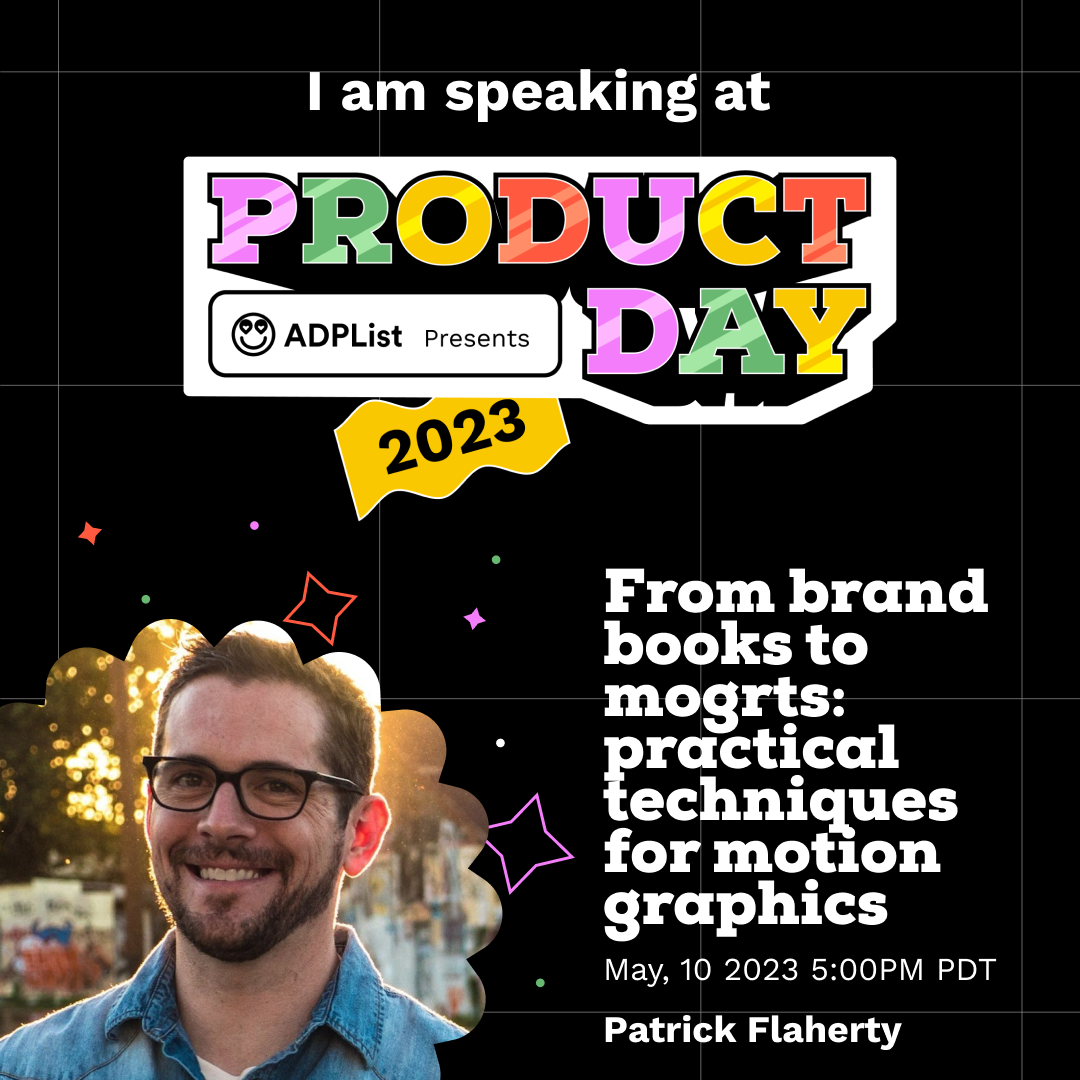
Product Day: From brand books to Mogrts
This talk was really about feel. I started with a simple question, how do you make motion part of the brand instead of something that gets added at the end, then followed that idea all the way down into the numbers.
I showed how I record a real gesture, in this case a paper flick, then translate that timing into animation curves so the motion keeps the same tactile snap. From there, the conversation got more practical. We looked at how to pull exact velocity values with Flow, write cubic Bézier and After Effects values into a brand guide, and decide how much specificity a system actually needs.
Then we built a toolkit around it, intros, lower thirds, transitions, and pushed it into Premiere as Motion Graphics Templates so editors could swap names, dates, and images without touching keyframes. The deeper point was about trust and scale, giving non-animators tools they can use without breaking the motion language.
BeMore: Land That Design Gig
This one leaned into the messier side of job hunting, the part where you have to decide what you actually do and who it is for. We workshopped personal mission statements live using a simple frame, persona, audience, promise, because if that sentence is fuzzy, the rest of the portfolio usually is too.
From there, we turned that clarity into more practical things. We talked through portfolios that lead with what you did, what problem you solved, and how you approached it. We also got into the small details that reduce hiring friction, like putting your location up front, labeling your exact role on each project, and giving viewers an optional production breakdown if they want more depth.
We closed on presentation habits, building a deck that can be swapped based on the role, planning ahead instead of improvising everything, and sending a short pre-read so the conversation starts warmer. The throughline was simple, prep creates depth, and good materials make it easier for someone to see your value quickly.
Selected Works